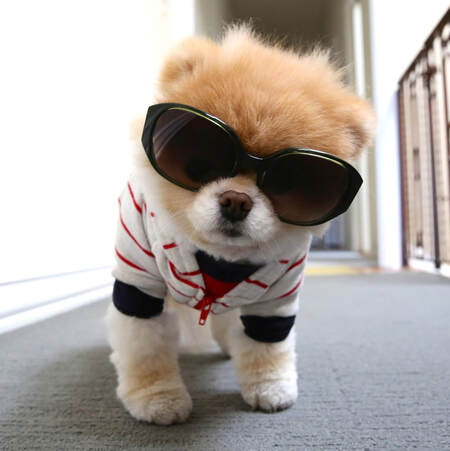
 “…it is not a slight thing when they, who are so fresh from God, love us." Charles Dickens More of my friends have granddogs than grandchildren. I rarely even see children any more. I drive through neighborhood after neighborhood, not a child anywhere. On my regular walks, there are no bicycles lined up at the park, no giggles floating through the air, no petty arguments with shouts of “I’m telling” when childish negotiations falter. The researcher and writer Jean Twenge observes that a generation is defined not by historical events, though these shape experiences and attitudes, rather it is changes in technology that characterize each generation. And as technology has progressed, we have become more individualistic, less communal. We just don’t need each other as much for the hard labor of life-sustaining activities. With less wear and tear on our bodies, we are living longer. With longer life comes extended youth and later maturity. But as wannabe grandparents are here to remind, the biological clock is still an ancient wind-up toy. It ticks for only so long, and then it winds down. Stops. Makes us too late for the party. COVID did not help the grandparent cause. The COVID years emphasized to young adults that children are a lot of work and a big expense. Young adults wonder: in these increasingly difficult economic conditions, where will the money come from to house children, clothe them, educate them, and entertain them? How will there be time left for young adult pursuits and careers? And what about the environmental catastrophes that make the headlines each day? Will there even be a world in which to live, a world that can accommodate one more tiny body in in need of a mouthful of oxygen? And so it was off to the pet stores and animal shelters for these fertile young people. What are aging parents to do other than offer to babysit their granddogs? “Life is on the wire. Everything else is just walking.” Karl Wallenda, High wire artist and Founder of The Flying Wallendas Parenting is demanding. And expensive. It requires sacrifices. In moments, it can even be terrifying. It is a high wire act. The wire swings. We must constantly rebalance. As my graduate school adviser once observed, “You are dead no matter which side you fall off.” And as parents, we risk taking others with us. But parenting is also exhilarating. And meaningful. And forever. By comparison, everything else in my life has been just walking. “Quick, I’m starting to forget. What does God look like?” a three year old big sister to her new baby brother in Such Kindness by Andre Dubus III Don’t arrest me for heresy, but I suspect that God is a grandparent. What else can explain that God has not yet tired of humankind? For grandparents, the birth of a grandchild is a magic act--a baby is pulled out of a womb, and we are the ones born again. And this grandchild, this wonder, came from a child that we made or adopted and raised. Grandparenthood offers the hope that maybe we didn’t do everything wrong…maybe this wonder is a message that even if our own children have not forgiven our faults, God heard all of those fraught prayers we said in the dark. In each other’s eyes, we see what God looks like. Grandchildren are an invitation to life, to come off the bench and join in the game. They allow us to focus on beginnings not the end. We feel young again and in love with hearts beating both wildly and tenderly. Our older years are no longer about mere preservation of our aging, deteriorating bodies. Our grandchildren help us to keep loving life. There is no future in memories alone. They must be shared, passed down, connected to new memories, memories that weave a history and define what it means to be a family, this family, memories that fashion a story that will be worth re-telling for generations to come. While I have nothing against dogs, and I do appreciate the joy, companionship, and health benefits of pets, I miss a world in which children are more present and visible, where their safety and well-being are the responsibility of all of us. And where the joy is shared. With so much focus on accumulating, updating, and replacing things, wealth building, and saving for retirement, I wonder if only the wealthiest among us can expect to have children and grandchildren. Or will children become as out of date as the rotary phone? Where will the fruits of our lived lives go? To some lucky dog? Perhaps I will hear all about it from the dog sitting beside me the next time I go for a facial.
0 Comments
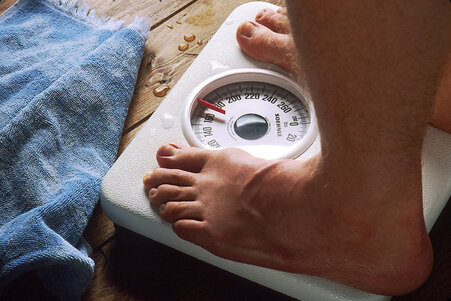 Ever have one of THOSE days? You know what I’m talking about. You wake up in the morning and you are already tired—the worst possible way to start the day. One of THOSE days is a day when everything you touch experiences system failure. You try to pay a bill that is due today. You go on line and the computer freezes and the site goes down. How you discover that the refrigerator quit working during the night is by pouring sour milk on top of the last bit of cereal and taking a rancid bite. You go to your car in the pouring rain to find the tire pressure light is on. Road construction is blocking your driveway, and you pull out into speeding traffic like a blind woman in a pedal car with wobbly wheels. Each tiny cut of discouragement leaves you bleeding on the curb of life and you have to pretend you booked this location just to take in the view from below. I am not talking about a full blown state of clinical depression. I am just talking about one of THOSE days. On one of THOSE days, you lose all knowledge of how the world works, except this: you know from experience that it is not a good day to weigh yourself. You have been around long enough to know that there are things you should never do when under the influence, but adding insult to injury is what you do under the influence of one of THOSE days. You try to talk yourself out of it. You are long familiar with this particular brand of self-harm, this proof that you are a loser but not of pounds. You know you should just get into your car and start driving to a Betty Ford Clinic to address this relapse in your addiction to self-hatred, but you don’t. You step on the scale instead, and just as you knew would be the case, the needle moves up. And then you chastise yourself for having been a fool when you should have known better, and you curse the gods that gave you a slow metabolism, a hefty bone structure, big feet, and a serious water retention problem. You know the number on the scale can’t possibly reflect the portion-controlled few morsels you ate yesterday. It is all more evidence of the cosmic injustice that is your life. You can never admit any of this inner drama to anyone, and so you try to act like a normal human being. The demands of life propel you forward into the day. You dress and face the weather and the traffic. You blast some old Motown hits from your playlist and sing along as you drive. You get to work and get busy. You engage with people you like. You solve problems. You make plans. You take a walk. Slowly, you forget that you hate yourself and the world. By lunch you convince yourself that your morning fast and the calories burned in the fire of angst make it safe to eat lunch. And you do. And you feel better still. And the work day ends, and you realize that slowly, while you weren’t looking, one of THOSE days became a GOOD day. You offer thanks to the Great Day Trader who gave you a better day than the one with which you began. And you do not weigh yourself when you get home.  The votes are in, and there is no doubt in my mind that we have a legitimate winner. The best word won! And in my book, it is the best invention since deodorant. It is just too good to keep to myself. Earlier this week, in a “eureka!” moment I clicked on the link supplied by a friend who is also a lover of words, a thinker, and a seeker. Being from the school of If You Can Name It, You Can Tame It, I am thrilled to have a name for the disease that has overtaken society and an answer to my incessant question, “What the hell just happened?” I feel like a scientist who has spent a lifetime looking down into a microscope or up into the sky and who suddenly arrives at a cosmic breakthrough. What I don’t understand is how this has stayed so quiet. Why hasn’t the inventor rocketed to fame? Applause please for Cory Doctorow and the American Dialect Society word of the year: enshittification. I am no John Maynard Keynes or Milton Friedman, but my take on economics is that unchecked capitalism moves toward greed and corruption. There are no “free markets” where supply is created by demand. The suppliers psychologically and physically manipulate us into “demanding” their products and services. This is why we need government—to keep us all socially responsible, but enough about online platforms and the state of the economy and American politics. I am bringing this new word of the year into common use to include anything that once was good but has been degraded by negative social forces. Like a kid who just learned the power of dirty words, I find opportunities everywhere to use my new vocabulary. Scrabble anyone? My children will be pleased to know that I am finally replacing the F word in my daily speech, something else that has gone to ruin as I age in this time of general degradation. If you knew me in the past, you might think I am a prisoner of war making coerced statements, but no, it’s really me, another case of the rot done by technology. Enshittification. Say it once more with feeling! We know what we’ve got. Or what’s got us. Get out some hand sanitizer. Put on some gloves. Let’s clean up this mess! 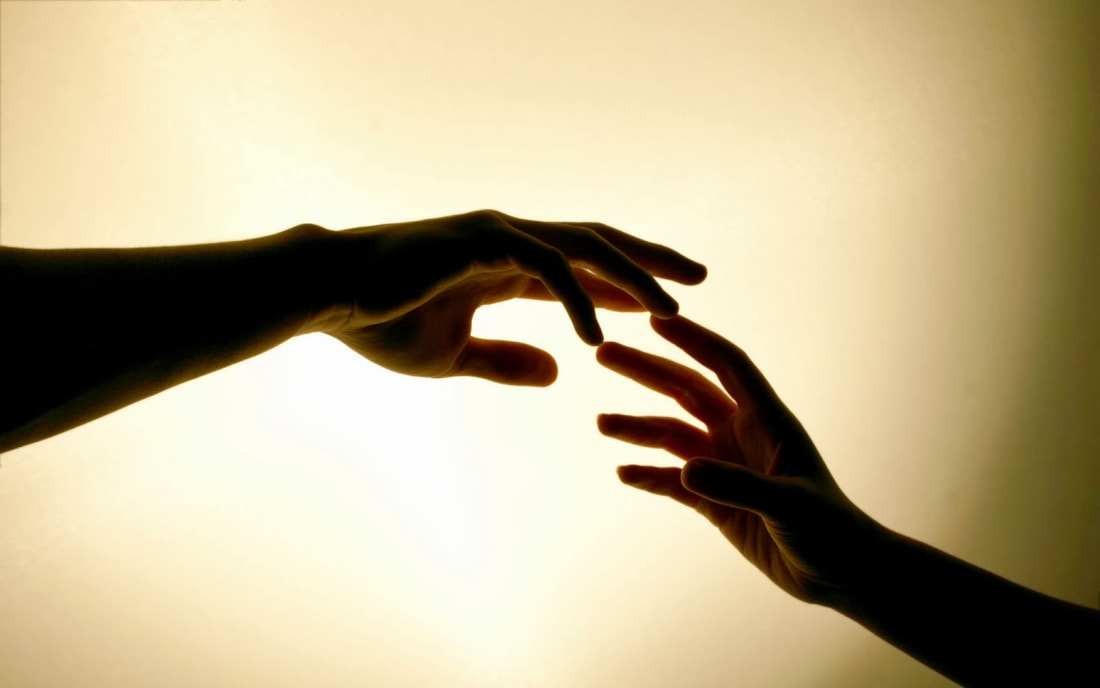 Because if people touch God anywhere, where is it except through their conscience? (From: The Ox-Bow Incident) There is no end to the bad news. I end the year bewildered. If the headlines are true, the human race has become unteachable, unmanageable, and ungovernable. Each individual now operates in a “world of one” where the rules don’t apply to ME. At the same time, the headlines scream that loneliness has become an epidemic. It appears we cannot live in a world of one and be happy. Where shall we find hope? Despite my Catholic upbringing, my childhood image of God was not manifested by our priest, the Pope, or even Superman. God’s presence, His reassurance in our everyday lives was in our Uncle John. He was the benevolent omnipresent force, an idol we did not want to disappoint. He greeted us with the touch of his thumb pressed against ours, but we lived touched by his presence. We lived with faith in knowing he was out there, that the phone would ring at just the right time, that there would be a hand in hard times. Uncle John was not prone to lecture or to “stirring the pot,” as he would say. Never one to judge, his worst admonishment was a slight tension in his jaw, a wince of his right eye. His was the voice in our heads at weak moments when we were not thinking straight. We carried him with us on the inside, a conscience to our consciences. Not everyone believes in God, and among those who believe, there are different images of the One, The Force, the Something Greater. My own beliefs have evolved over the years. While I no longer accept all of the teachings of my early religious education, I cannot help but believe that there is something greater than me. Hope would not be possible otherwise. Sometimes on a hazy day when the sun breaks through the clouds and a beam of soft light shines down on the earth below, I expect to see the hand of God break through the clouds and reach down and touch me just as I have seen in beautiful paintings. I believe the beauty of our prayers and holy rituals is that they connect us to this helping hand and to all those who came before us and whispered, sang, and shouted these same words. And in those moments of shared prayer, we are one with the millions of others who, at the same time, are bent in prayer and reaching out with their hearts to the same Something Greater to say, ‘”Touch me. I am here.” I believe that the children of Gaza and the Ukraine and Sudan and so many places around the world are praying too. Some helpless child resting on the street in a border town in our own country trying to escape violence, famine, and hunger…they are praying too. They say the same prayers, ask for the same relief, hope for the same blessings. When I meet with them in prayer, holding hands with the One, there is no way I can see them as vermin or poison. And so, I pray to live more consciously and with conscience in the year ahead. I resolve to ask: “How can I be of service?”--rather than: “What’s wrong with these people?” I know I can be better. I can do better. And Uncle John is still watching. We have God’s phone number. Let’s keep in touch. Happy You Near! 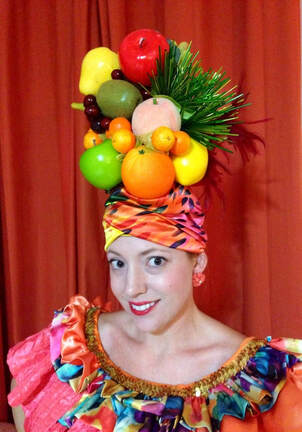 For me, the COVID years were a fall from grace. There was the forced social isolation and the unplanned early retirement. Those seemed like momentous changes at the time, but I adjusted. Turns out, the long-term damage was to my wardrobe. While I never caught the virus or lost my sense of smell, I did suffer a complete loss of taste. Now, I am trying to come to my fashion senses. With minimal social contact during the pandemic, I cared little about my style or about the frequency with which I did the wash. Laundry happened whenever the fabric freshener ran out and my clothes marched themselves to the washing machine and pounded on the lid. My COVID wardrobe consisted of six pairs of sweat pants, an equal number of oversized t-shirts, and a pair of walking shoes. My back-up system for improvising consisted of an emergency body bag in basic black and a stash of single-ply toilet paper stockpiled when the good stuff disappeared from the shelves. Now, nearly four years out, the body bag and the single-ply toilet paper are in pristine condition, but I notice that some of my clothes are becoming see-through in should-not-be-seen places. “It’s time,” I tell myself, “time to put COVID behind me and get a real life and put on some real grown-up clothes. I officially declare the pandemic over and myself in recovery.” I dig deep into the closet in the spare bedroom to see what survived my bouts of clean-it-out-and-give-it-away during the heat of the pandemic. I try on some of my pre-COVID wardrobe, some of my old office styles. The look staring back at me in the mirror says “stuffed sausage.” Not a good look on a vegan. Because I haven’t shopped in more than four years, I have no idea what is in style. My COVID fashion statement read “survivor.” Now, in the fall of 2023, Vogue tells me that it’s all about “monochromatic tailoring,” and “the sultry return of lingerie-inspired looks.” What? Tailoring?! I haven’t worn a fitted waistband in 15 years, and I am guessing they haven’t seen my lingerie. It pre-dates COVID and is sturdier than a suit of armor. I am hoping that’s what the editors mean when they report that metallics are in style this season. Reading further down the list, somewhere between cinched blazers and kitten heels, I see that “90s nostalgia” is in as well, and I think, “Good Lord! I was pregnant for most of the 90s.” When I get to “denim-on-denim” I look over my shoulder and check my privacy settings. Appalled and thinking it’s not too late to become a cloistered nun, I see some terms I can reckon with: “oversized clothing” and “relaxed effortless style.” Well, well, well, it’s true: everything old is new again! I repeat the magic words: oversized, relaxed, effortless, and presto chango, I’m back in the game. It appears the key to fashion is patience. I am reinforcing my well-worn sweatpants with all that toilet paper, and just in case I am invited to a more elegant event requiring a runway look, I am holding onto the black body bag with the metallic zipper. I’ll dress it up by wearing a pineapple on my head. As they say at Vogue, “there are so many way to sprinkle a bit of magic into our seasonal wardrobes…and turn heads.” Oh, yes, there is…oh, yes, I will! 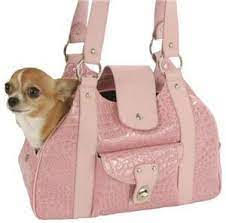 After a year of breast cancer diagnosis and treatment, I now think of my right breast like one of those tiny dogs that can be carried in a purse. Of course, my breast goes everywhere with me. I am not sure if this part of me has legs or if it is just a cute bobbing head with a cold nose, but like any privileged, spoiled pet, my breast eats up a lot of my time, and I’m always whipping it out to show someone. Together, my breast and I have had more views than Lassie, and we’re not even on TikTok. I’ve named my pet Lymphedema. I am certain that must be the name of a Roman Goddess, one that comes alphabetically after Febris, the Goddess of Fever, and before Minerva, the goddess of pretty much everything else including wisdom, medicine, commerce, handicrafts, poetry, the arts and war, a woman for all seasons and all reasons. Lymphedema is in good company. I am afraid my Lymphedema became full of herself not because of her namesake but due to the frequent picture taking. There was the mammogram, the ultrasound the ultrasound-guided biopsy, the ultrasound to insert the clips prior to surgery, the MRI, another MRI, a CAT scan, imaging during radiation treatments, another mammogram, another ultrasound, and then still photos when she developed redness, thickening skin and a spreading rash. And during various photo ops, attentive techs always asked what music I would like them to play. While I would have preferred a relaxing James Taylor song list, for Lymphedema’s sake, I always requested How Much is that Doggy in the Window. A lot of poking and petting went along with the many photo opportunities. There were the doctors, nurses, nurse practitioners, mammogram techs, ultrasound techs, radiation techs, oncologists, students, and even a visiting scholar! The scholar pretty much stared into his cell phone the entire visit. I am not sure if in his role as scholar he was taking notes, photographing my breast, or watching TikTok videos. Lymphedema is convinced he was texting his Albanian colleagues about the rare and beautiful Lymphedema. Whatever he was doing, his presence seemed to unsettle the usually confident and friendly young, male radiologist. Rather than touch Lymphedema during the exam, he asked, “Can you just hold it up?” I think the awkwardness of the situation may have offended Lymphedema. But in prouder moments, Lymphedema and I mastered important poses including the classic shoulders-back, elbows-bent, arms at side and hold it while the judges look for bumps, puckers, rashes, and burns. While that was easily mastered, I recently learned that I now have to exercise Lymphedema. Turns out that just carrying her around and popping her out for show-and-tell was not enough. She now demands a daily walk! And then I have to grab her in a football hold and spin her in circles both clockwise and counterclockwise. Through this long year, Lymphedema has become socialized and obedient learning the commands for each important event. Her appearance is improving along with her attitude. We are getting up to date on our vaccines for the coming year, and I am becoming a better handler so that I can highlight Lymphedema’s best structure—this is known as the stack, and we are stacked! Although I am not sure if Lymphedema will ever enjoy the hands-on examination or being looked over by the judges, this year of obedience training has deepened our bond and improved our communication. Lymphedema is now much better behaved and has not barked at me or anyone else all year. I think we may be off to Westminster for the annual Dog Show. As a team, Lymphedema and I may not be much in class but we are best in show. Together, we have come through like champions. Now, beam me up, Scotty. I need a new sport.  “A mind is a terrible thing to waste.” Arthur Fletcher, United Negro College Fund “In my head I was thinking.” The speaker loses me right there. His brain may be a luxury liner, and he may be about to tell me the secrets to world peace, climate change reversal, and how to grow thicker, more luxurious hair, but my thoughts dive overboard. I replay his words while awaiting underwater rescue: “In my HEAD I was thinking.” “In my head I was THINKING.” I want to interrupt the speaker and ask, “Where else would you be thinking?” But my son’s insistent voice tugs on my mind in the same urgent way that he pulls on my arm in a department store when I am about to confront a shoplifter: “Mom, it doesn’t work that way anymore.” Oh! And uh-oh! Another reminder that I am either touched or out of touch, drowning in a sea of changes. The most fundamental truths no longer hold water: now we must qualify where our thoughts come from. No expert, but ever curious about why people do what they do and say what they say, I take a deeper dive. What better arena to find people talking than in politics? I listen. I try to grasp the thoughts behind the words. I try different news sources, and then I ask myself: Did that really come out of the head of a person educated at Penn? Yale? Harvard? Stanford? Pretty pricey educations. And in my head I think I have found the reason to forgive student loans. Just to be sure it’s not just me struggling with the question of where thought comes from I turn to a friend about one of her recent experiences. Needing assistance in a store, my friend approached the customer service desk where another woman was already waiting for help. No one came to staff the desk. After waiting a bit, the women approached an employee stationed in the self-checkout area to assist customers who, shockingly, were having problems with self-checkout. On the surface, it seemed like the customer service representative and the two women shared the same language, but this customer request for a manager or someone to assist them just did not seem to compute in the young employee’s head. Finally, he pulled a response from the same pocket where he keeps his much smarter phone: “There’s no one here that can help you.” End of discussion. Problem unsolved. My friend, a very bright woman who carries a big engine in her own head, persisted, “Well, who would you call if the store caught on fire?” That seemed to get the lights flickering in the young man’s eyes: “Oh! That would be Tom?” “Well, could you call Tom?” Tom never appeared but the two women with the thinking heads solved their own problems. Back at home, I watch a neighbor walk down our shared hallway, dripping and dropping food onto the carpet as he goes. Not unnoticeable, and yet he keeps walking. Keeps dropping. Keeps spilling. And steps in it! Days pass. No attempt is made to clean up the mess. His smart phone is on and updated, but his beautiful head is on lockdown. At work people appear to be busy on their computers. They receive a constant stream of music and podcasts from their earbuds. As their minds process all of that sensory stimulation, I wonder: where do they think? And when? I would ask them, but they can’t hear me. Wonderful people I’ve known for a lifetime are suddenly up in arms about a variety of conspiracy theories. Salacious, crazy ideas picked ripe from the internet and social media are turning their good minds into debris fields. No thought or fact checking required. All of their mental input is handpicked and arranged by AI the new thought generator. I contemplate the notion of “artificial” intelligence. Is that an oxymoron? Or a bad substitute like ill-fitting dentures? Whatever AI is, it bears a shocking resemblance to the artificial additives that enhance the color, flavor, shelf-life, and addictive qualities of processed food. All of the flavor but none of the calories. And none of the nutrition. Seems to me the food giants do their thinking in their wallets. Never mind that artificial ingredients have led to an obesity epidemic that is the leading cause of death in America. Perhaps they learned this approach from the tobacco industry whose product is known to kill one out of every two of its best customers. And so, in my head, I ponder: What does this new artificial substitute for thought mean for our minds? After tobacco, it was food. Now it is technology. We are already experiencing AI poisoning. Maybe we will eventually kill each other. And like the tobacco and food companies before them, big tech owners will stand back and claim it was all “freedom” regardless of their industry’s psychological manipulation. But, by then, the big tech guys will own all the real estate on Mars and the only rockets to get there. Don’t you love freedom? The life of the mind is under siege. The future of thought is not looking good. What is to become of that vault of jewels that makes us human, the many faceted gems of thought, wonder, creativity, and empathy polished by time, experience, education, flexibility, maturity, and relationships? What happens when our heads are as junk-clogged as our arteries? A poor swimmer in these uncharted waters I doggy paddle to stay afloat. I conclude that psychologically manipulated information--no matter the volume--is not thought any more than Cheetos are nutrition. To the in-my-head-I-was-thinking-guy—I owe you an apology. And some credit for trying. |
AuthorLilli-ann Buffin Archives
April 2024
Categories
All
|
 RSS Feed