all of the selves we Have ever been
|
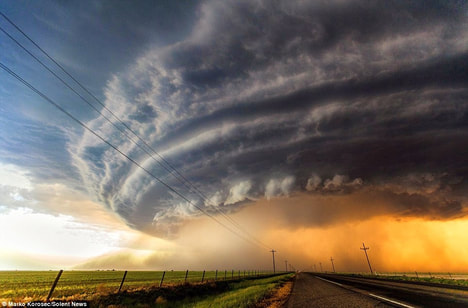
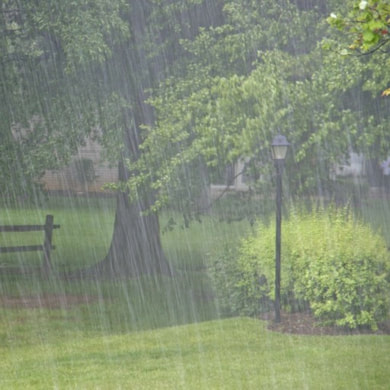
I didn’t get it back then, that time so long ago when my father said, “I miss thunderstorms.” In the later years of his life, my father moved from Western Pennsylvania to Southern California, a place of good memories, a place he had loved during the prime of his life. After his move, the one thing Dad missed enough to mention was thunderstorms. When he was diagnosed with pancreatic cancer and deeply, painfully reflective, I sent him an audio cassette tape of a booming, drenching thunderstorm. When I sent the tape, I thought it was just a weather event that my father had been missing during his years in endless sunshine, but as I sit at my desk today, in the later years of my life, listening as the rain pounds down just outside my own window, I understand that his longing was for something more than rain. All around me I feel the growing stillness. Thunder is rolling in the distance. It is ten o’clock in the morning but dark as late evening. The tree outside my window begins to bend and sway in the wind. The leaves on the tree shimmy from the force of sudden, large, pelting raindrops. Traffic and outdoor activity cease. The birds that had been singing earlier are nowhere to be seen or heard. While the typical outdoor sounds are absent save for the thunder and the rain, the sounds inside my apartment are amplified: the ticking of the clock, the hum of the refrigerator, the quiet whir of the ceiling fan, the beating of my heart. Somehow, I am more alive and alert in the stillness. My busy mind is stilled too. I am aware of nothing but the sensory experience around me, the life force within me. A bolt of lightning makes me blink. It is followed by a crash of thunder that makes me jump. It is not a feeling of fear or helplessness, but one of a greater wisdom: it is wise to stop, to attend. The thunderstorm carries me away. I am here but not here. I am living inside a snow globe where it is the world beyond the glass that is being shaken. Time stops. I am given a free pass to do nothing but listen. Somehow the weather settles in me and on me. I am cloaked in humidity and sound. The thunder reverberates in my ears, and like an electric shock, stimulates my heart that moves in synch. I am in the rain but not in the rain. My body becomes a sympathetic barometer of the weather outside. I think back to my mother shouting, “Get away from the window,” as she chased me and my siblings off the couch where we had settled on our knees to watch the storm outside. She pulled the drapes. Mom never explained the science, but we grasped her fear that lightning could strike us through the glass if it chose to take such aim. But I am a grown up now, a taller version of that former curious, perhaps incalcitrant, child I sit in front of the window, drapes opened wide, and I watch: the eerie stillness as the storm whips up a fever, the thrashing, and then the return to stillness, the dark clouds hovering, taking a pause, re-committing to another downpour. I wonder: why am I not afraid of something so ominous? I take in the lesson from nature--facing the things so much bigger than us, so much out of our control, things that will pass. I am calm, a calmness that is something more than acceptance of the storm or its eventual passing. Somehow, I am joined with nature in the divine plan that all the things are one, the things that say: STOP. LISTEN. BE. There is nothing else but this. The storm calms. The leaves and the branches are still. They shake off the rain drops in the last breath of wind. They bounce back to full attention, listening for the sun’s commands. I hear the revving of a car engine. Someone making a break for it…whatever “it” is. A faint light appears in the sky through clouds that are now white and light enough to see the blue behind them. Do the clouds lift? Or do we? Cleansed by the pause, from the moments when we turn ourselves over to the forces of nature? For a brief time we are stilled, more aware of our authentic Garden-of-Eden selves, more aware than daily life allows us to be. We are quiet, outwardly attentive, inwardly connected to the electricity that powers all of nature. Life itself is a passing storm. We are given moments when nature brings man’s plans to a halt, moments to rest and reflect. Moments when darkness gives way to light. So much of what demands our attention is inconsequential--oil changes and laundry. The emerging light in the sky says, “Safe. At ease. As you were.” And so we pick up with chores of the day. But can we really be “as you were?” This life doesn’t really belong to us. It is a passing storm. There is peace and sunshine on the other side. I will see you there one day, Dad.
2 Comments
For the past three days I have been living in paradise. Apparently, I was transported while I slept.
After the craziest winter weather that I can recall from recent years, ideal conditions blew in on a refreshing breeze. The weather has been so divine that it makes it possible to forget about everything else, and it has been better than a beach vacation—no packing and no flight delays. It is all comfort and joy. Perhaps it is not just the political climate that has gotten us all down. Maybe there has been an epidemic of meteoropathy, the physical, mental and emotional symptoms that emerge with changes in the weather. Temperature, humidity, sunlight, darkness, fog, precipitation can all influence our moods, our energy levels, our stress levels, and our intellectual functioning. We can experience weather-related irritability, migraines, insomnia, stress, anxiety, depression, and most familiar of all to us older folks—aches and pains. I never knew I had the condition, but with the boost in memory, mood, attention, energy, and optimism that I have been feeling these last few days, I have to wonder. It has left me feeling more compassion for Mother Nature who must be suffering a sort of chemically-induced menopause brought on by climate change—all those ups and downs in temperature, the burning hot flashes… Long before doctors, neuroscientists and mental health professionals diagnosed seasonal disorders the English language was full of behavioral descriptors based on the weather. I have been known to blow hot and cold depending on the circumstances and to brighten up--again, depending on the circumstances. Sometimes things are clear as a bell, and I am traveling on cloud nine. Other times things cloud my judgment and I can be as cold as ice. These cold snaps can be followed by dry spells especially when blown off by fair-weather friends who sometimes freeze me out. When I am more optimistic, I can have my head in the clouds and life’s a breeze, but lightning fast, someone can knock the wind out of me. Sometimes I am so busy that I have to give you a rain check, and sometimes life rains on my parade leading to rainy day blues. Those are the times when I search for a ray of sunshine. I have been known to skate on thin ice, and that’s usually when troubles begin to snowball until I am snowed under. I’ve noticed that people don’t like it when you steal their thunder. They are likely to storm out on you, but that might just be their stormy personalities. They like to take the world by storm and throw caution to the wind. Sometimes they throw shade while doing it. On those occasions when I am under the weather or weathering the storms, I think I might like to move to Sesame Street where they really know what people need. On Sesame Street they chase the clouds away, and it’s always a sunny day. Soooooo, while we’ve got the ideal conditions, come on out and play! The world seems to be falling apart before my eyes, a whirlwind of careless decisions, a twister of thoughtless bravado taking lives, taking our way of life. My heart aches. Some days I feel like I can’t go on. What will be left for the future? The mother in me mourns for my children. I know I am not the only mother worried. Mother Nature seems ambivalent too. In a single day, she shifts: the temperature is 75 degrees in the afternoon, 17 degrees when night falls; sunshine turns to frost with snow to my knees by morning. In the transition a strong wind wails and rattles my windows, Mother Nature weeping, perhaps. My therapy had been regular walks along a shared use path near my home, but on too many days the weather got the upper hand and I lounged at home instead of exercising. But yesterday I said “enough!” And I set out for a walk along my usual path. Deconditioned from the long, unpredictable winter, I immediately began negotiating with myself for a shorter walk. With every step, I chose a new turn-around-for-home spot, yet a part of me continued to ache for my old self, for that familiar strength and vigor, and, so, that old self kept arguing with the weary, deconditioned one: Turn back. Just to the next intersection. Stop here…and so it continued. It was not the pleasant, mindful walk of my yesterdays. Normally, when times and weather were normal that is, I would take two laps around the giant commercial parking lot at the end of the path. Yesterday, I thought about avoiding the lot altogether, but the negotiations picked up: maybe ONE lap. As I got halfway around, I turned into a smaller sub-lot next to the outdoor exercise area for employees. There I noticed tree branches and twigs sprayed all over the grass and pushed to the edges of the lot by the strong winds. They had come to a stop in a heap along the asphalt curb. In one of the short piles my eyes came to rest on a piece of a branch. It was broken, about two inches long, stripped of its graying bark. What was left was a beautiful stub in a rich burnt sienna, one of my favorite colors in the Crayola box. I picked it up. It was as light as a Styrofoam pellet and as soft as my grandmother’s cheek. There was something about the color and the softness and the strength of this broken piece that I could not part with it, and so I put into my pocket. My fingers rubbed against it as I made the second lap and returned to my home. Mission accomplished. I was back! Back to walking, back to myself. I placed the small piece of the broken tree branch on my desk where I continued to study it. I leave it there now in plain sight to remind me that there can be beauty even in a debris field; things can break and still be strong. Just a piece can still serve us, still feed our inner hungers. “Hang on wherever you land,” the broken but strong and beautiful piece tells me. Someone will find you. You will find each other. One lap or two? It doesn’t matter. What matters is that we just keep trying. Night time sharpens, Heightens each sensation Darkness stirs and wakes imagination Silently the senses Abandon their defenses… … listen to the music of the night (Music of the Night, Lyrics by Charles Hart and Richard Stilgoe) Yesterday, the harsh winter gave an inch, and spring took a mile. Overnight, we went from the depths of winter to late spring. The temperature rose by 42 degrees! Folks were out and about in their shorts and tank tops. Where the bike path had been desolate, it was now teeming with joggers, walkers, bikers, and dogs on long leashes. Everyone was smiling. Even the dogs.
It was so good to be back outdoors, and to be free of coats and hats, boots and gloves. After a day outdoors, I found myself tiring early, and I headed to bed about 9:00 PM with the windows wide open. Despite my fatigue, I lay awake in bed for hours, the air alive with sounds, sounds that a winter night keeps to itself behind the cloak of darkness, closed windows, and insulating snow. I lay in my bed, listening to the quiet, whispered song of the ceiling fan circling overhead. Occasionally, the long silver chain jingled on the twirling air like a choir of tiny bells. A long train rumbled in the distance like a thundering bass drum. The building shook like a giant morocco. The train’s air horn accentuated the beat with a mighty vibrato. Cars whooshed down the four-lane highway at the end of my drive, nylon brushes against brass cymbals. Sirens screamed in the near-distance like blares from a horn while a helicopter hovered overhead with the steady chop-chop of its propeller. A soft breeze kept the mini blinds tapping a steady beat against the window frame. The night was a dark theater. The phantom of summer had returned. I listened in awe-filled silence as I welcomed back the music of the night! It is day 302 of the pandemic. And it is pouring rain. What am I going to do with myself all day? Something happens to my mind on days like this. It feels like the apocalypse has occurred and there is no one left but me. These are the kinds of ideas that enter my mind on days like this: Whittle an oar out of the coffee table. Eat until I run out of food. Watch infomercials. Reply to all of the text messages received from voting organizations. Read my insurance policies that are up for renewal. Reply to all of the happy birthday messages I received back in March from my dentist, gynecologist, and favorite retailers. Sharpen all of my pencils. Sort the paper clips by size. Organize my canned goods alphabetically. Engage in consumer advocacy by spot-checking Kimberly-Clark. Are there really 110 tissues in my Kleenex box? Is each 3-ply? Of all of these ideas, the only one that really appeals to me is to whittle an oar out of the coffee table. Of course, that is the most dangerous and costly choice. Why is that always the case? Dangerous and costly—the definition of sex appeal. Perhaps I can do this cheaply. I do have that multi-purpose tomato knife that I have used to saw through giant pork butts, but my inner police sergeant screams at me: “Drop the knife.” And I do. I go to my fallback position: laundry. There is always something to wash. I gather and sort. I even add a few clean items to the basket just to get my money’s worth in the laundry room. I pass the day washing, drying, fluffing, folding, and hanging. The familiar ritual is therapeutic. I feel productive. I enjoy the warmth of the clothes as I pull them from the dryer. I inhale the fresh scent of the fabric softener. Yes, there will be a tomorrow! But back inside my apartment, I still have my eye on the coffee table! A storm is coming. I feel it as soon as I open my eyes. There is a change in temperature, humidity, air pressure, and the rhythm of my own heart. I awaken feeling both cautious and expectant. Outside my window, the world is upside down. The sky looks like a turbulent sea. Dark clouds tumble and crash like powerful waves rushing for the shore. I can smell the Atlantic Ocean from my third-floor-perch in Ohio. The everyday sounds of summer are quashed along with the sunshine. Absent is the roar of passing traffic. No doors creak open or slam shut. Neighbors’ voices are silent. Not even the birds are singing. The wind supplies the only soundtrack. Air moves through the trees whooshing and whistling. An empty soda can skips and scrapes across the pavement. The windows rattle, and the Venetian blinds bounce and bang against the window sill. I roll the tape and hear the voices of my parents saying, “Move away from that window!” There was a family thunderstorm protocol. As children do, we mirrored our parents when danger called. A storm was alive, like a stranger lurking outside the door. Children did what parents instructed. We mimicked the same serious, pensive moods of the adults. If we were playing outdoors as a storm drew near, we continued our activities, living on the edge, trusting that parents were ever alert and all-knowing. At the first distant flash of lightening or a warning crack of thunder, moms made haste to remove the whipping, snapping laundry from backyard clotheslines. The mother-sirens screamed, and the children scrambled. Bring in the toys! Find the dog! GET. INSIDE. NOW. Annual viewings of The Wizard of Oz provided children of my generation with effective storm education. We understood the trouble that comes to a child who fails to heed the word NOW. Once indoors it was off with electrical devices. Unplug the TV. That was surge protection. We drew the draperies and stayed away from windows and doors. Children found quiet things to do. We feigned distraction while remaining wary. Coloring books and Nancy Drew, Lincoln Logs and Hardy Boys kept us company. We were happy to have shelter. As the storm played out, we shuddered at strong claps of thunder and feared that pelting rain might break the glass. Despite its threatening power, there was beauty and majesty to a thunderstorm. Even as little children, we grasped a spiritual element to the weather and an understanding of things not just greater than us but forces greater than our parents too. When it was over, we were glad that our house had not fallen on us, though some magical ruby slippers would have been nice. We were equally grateful to be doing some minor clean-up out in the yard instead of wandering lost on a terrifying yellow-brick road. Occasionally, some items that had gotten loose in the wind might need to be returned to neighbors. That exchange usually led to some conversations about relief and gratitude. As the rain moves in, I find myself wishing we had been more careful with our words when the coronavirus slipped across the border. What if officials had described it as a weather event and a storm instead of an invisible enemy and a war? We live with seasonal weather events. We know what steps to take in a storm. Wars are unfamiliar; we don’t know what to do. Storm protocols demand compassion and cooperation. Wars breed hatred and mistrust. Warfare encourages resistance and violence. In a storm people choose safety, not sides. Rain and storms are temporary; they blow over. War changes life permanently; enemies are forever. We are happy to take shelter in a storm. Hiding from an enemy fuels outrage. We feel storms coming and a corresponding sense of urgency to calmly prepare and protect. The threat of war creates disbelief, naysayers, propagandists, and chaos. Storms bring out a spirit of community both in preparation and in recovery. In war, people hold their ground and their grudges; they fight over the spoils. During storms we remain vigilant but hopeful. Realistic and prayerful. We acknowledge the spiritual elements of nature and try to find meaning in our tempestuous circumstances. But in war, hope, faith, and meaning become casualties. Some people lose God and never recover their souls. It is easy to return a t-shirt or a pair of pajamas that blew from the clothesline in a storm. It is not so easy to gather up the bodies of neighbors that litter our lawns after a war. We can replace the roof and remodel the kitchen when the storm has passed. It is much harder to restore a livelihood that is in shambles or suture the shredded self-esteem that hangs from broken tree limbs. The insurmountable grief following war makes storm clean-up seem easy. Dorothy waited too long to get into the storm shelter. That decision led to an exhausting and uncertain journey. We sympathize. We are tired too. Our words matter in characterizing the things that happens to us. Hopefully, during the remainder of this pandemic, this virus storm, we can come to our senses, summon our courage, and find our hearts. We do not need ruby slippers to remind us that in a storm, there is no place like home. |
AuthorLilli-ann Buffin Archives
June 2026
Categories
All
|


RSS Feed